

A store with history
Madeira embroidery: tradition, technique, and authenticity
Madeira embroidery is one of the finest examples of Portuguese craftsmanship, renowned for the delicacy of its stitches, the quality of its linen, and the richness of its motifs. On this page, you will find a complete guide to its history and techniques, as well as tips on how to choose and care for your pieces.
Origin and evolution
Originating from regional textile traditions and influenced by European trends, Madeira embroidery has gained its own identity over the centuries, becoming synonymous with finesse and durability. Today, it is valued in both classic and contemporary settings, maintaining the excellence of handcrafted work.
Characteristic materials and features
Fabrics: linen in various weights and highly transparent organdy.
Threads: pearl cotton and, in special pieces, applications with shiny fibers.
Common stitches: blanket stitch, satin stitch, satin stitch, richelieu stitch, and ajour stitch, among others, combined to create reliefs, openwork, and “lace” effects.
Online Store
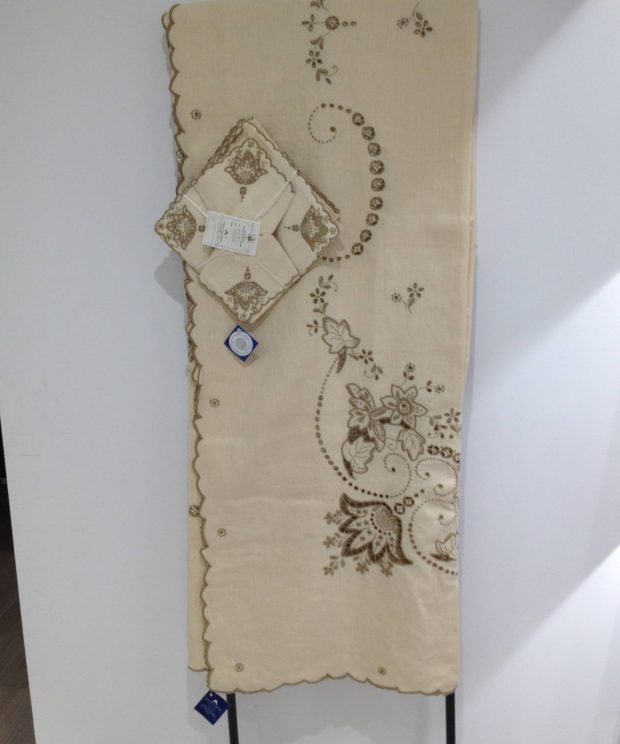
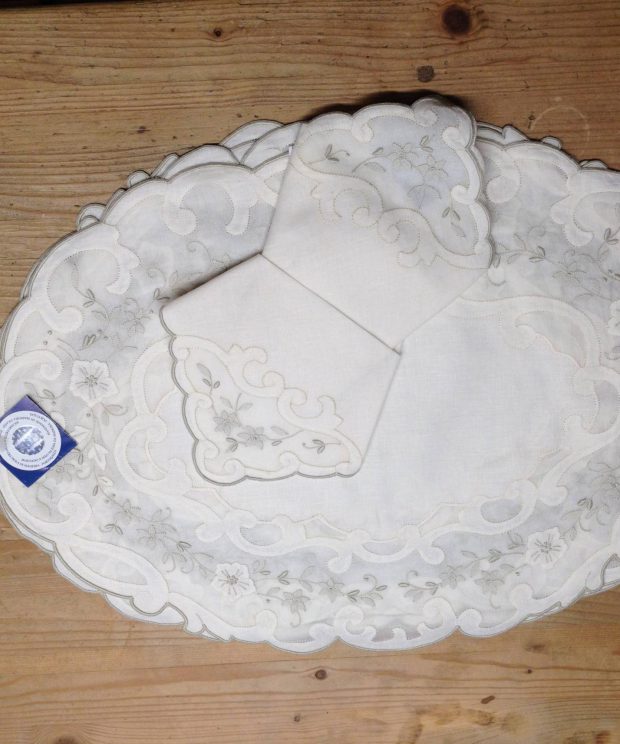
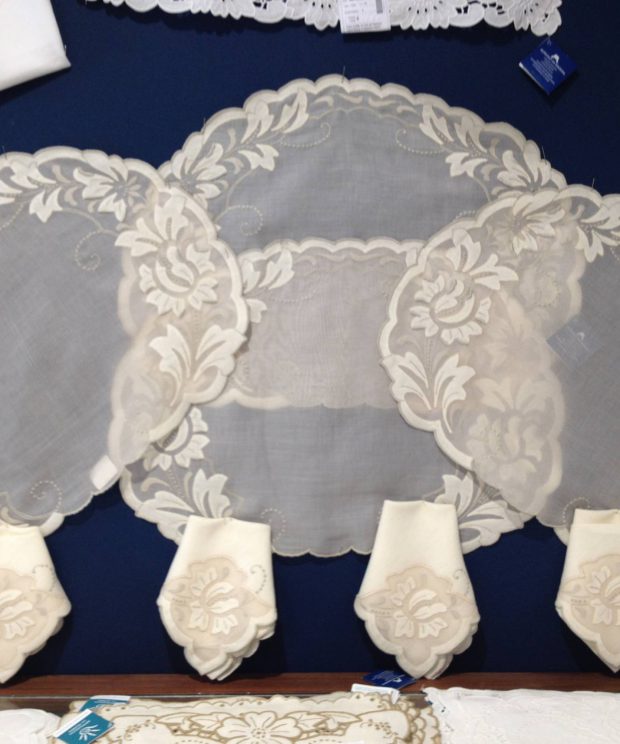
Motifs and symbolism
The floral motifs, branches, and garlands evoke the Madeiran landscape and an image of timeless elegance. On tablecloths, placemats, and base sets, the compositions balance full and empty areas for a light and sophisticated visual impact.
How to recognize a quality piece
Regular stitches and clean finish on the reverse side;
Uniform linen texture, without pulled threads;
Cut and hems without loose threads;
Documentation/label from the producer when applicable (artisan/studio).
Care and conservation
Hand wash with mild detergent, do not wring, dry flat on a towel, and iron inside out with a warm iron. Store in a dry place, folded on tissue paper to prevent creases.
Frequently Asked Questions
Manual execution, regularity of stitches, and the quality of the linen distinguish handmade pieces; industrial pieces tend to have mechanized stitches and less visual depth.
Linen can oxidize; gentle washing and storage away from light help preserve its whiteness.
Base sets, tray cloths, and placemats are safe choices.
Yes, the contrast between natural fibers and contemporary ceramics works very well.
Spray lightly with water, cover with a thin cloth, and iron inside out.
